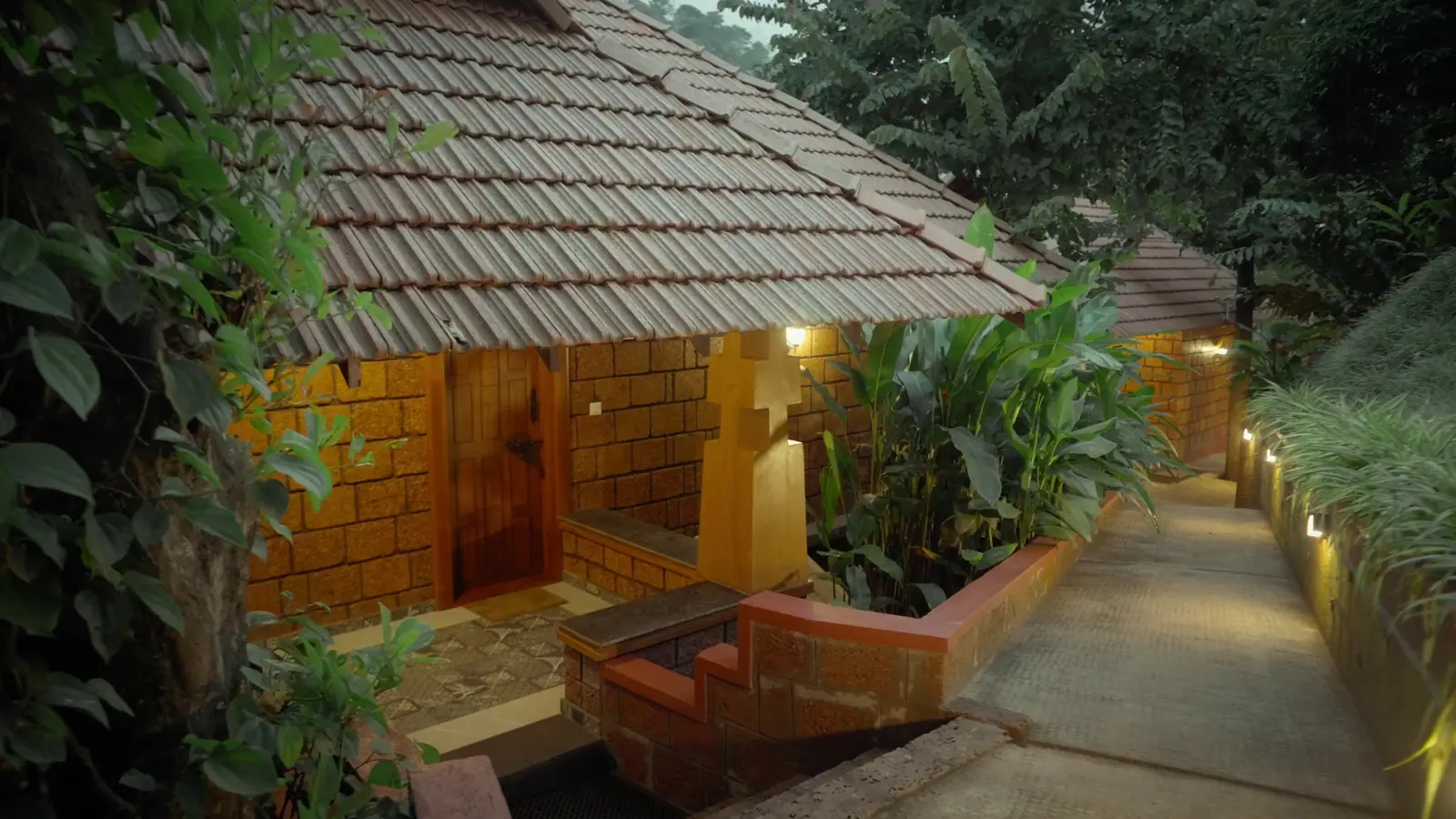
A coffee plantation tour in Coorg is a walk through a working forest: coffee bushes in the shade of tall trees, pepper vines on the trunks, birds overhead, and whatever stage the crop is at. Kodagu grew about 37% of India’s coffee in 2023-24, according to the Coffee Board of India, so this is the heart of the country’s coffee. Below: what you’ll see, when to go, and what to ask.
Key takeaways
- Kodagu produced 132,620 tonnes of coffee in 2023-24, about 37% of India’s crop (Coffee Board of India).
- South Kodagu is Robusta country: about 95% of the Virajpet zone’s coffee area.
- Go December to February for picking and drying, February to April for blossom.
What happens on a coffee plantation tour in Coorg?
You walk the estate’s paths with someone who knows the coffee, and they show you the plant, the shade and the season. The Coffee Board describes India’s coffee as grown entirely under shade, beneath a two-tier canopy, so expect to spend the walk under trees rather than in open rows. Many end with a cup.
The best guides explain the year as you walk: where the blossom comes from, when the cherries ripen, how the beans are dried, and why the trees matter. At Mokha Grove, near Pollibetta, that’s the morning Coffee Stories walk, included for staying guests, with a taste of estate coffee at the end.
Why is Coorg coffee grown under shade?
Because shade trees protect the soil, recycle nutrients and keep the coffee cooler. The Coffee Board says nearly 50 different types of shade trees are found in Indian plantations, with pepper, cardamom, orange and banana grown alongside the coffee. In Coorg you’ll often see black pepper vines trained up the shade-tree trunks.
The trees pay their way. A 2016 study of 113 farms in Kodagu, published in Agronomy for Sustainable Development, found that every extra 100 native shade trees per hectare raised coffee berry production by about 5.6%. Shade also shelters birds and bees, which is why a plantation walk is often a birdwatching walk too.
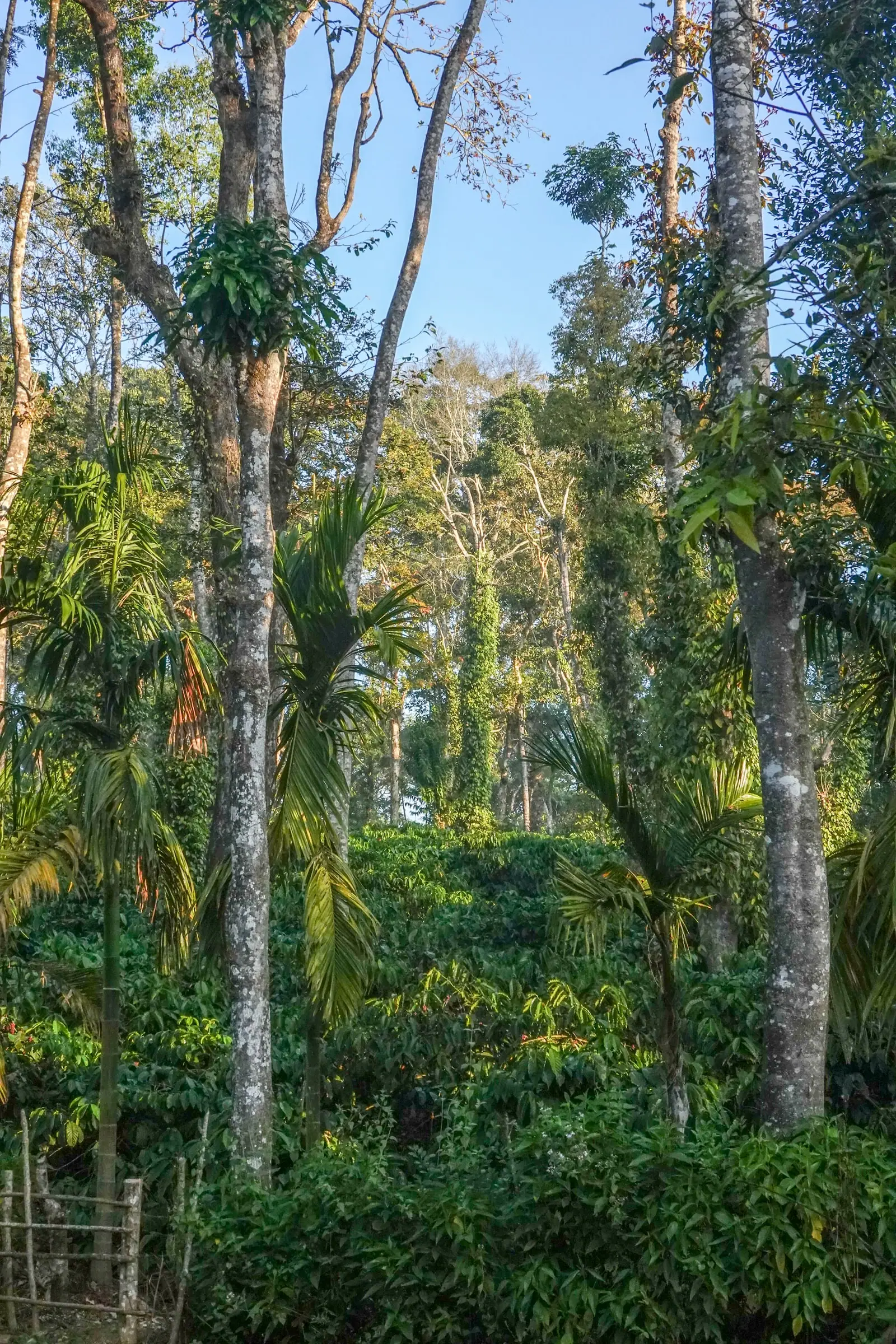
Robusta under shade, with pepper on the trees. Photo: T. A. Gonsalves, CC BY-SA 4.0.
Arabica or Robusta: what grows in South Coorg?
Mostly Robusta. In the Coffee Board’s 2024 database, the Virajpet zone in South Kodagu has about 50,057 hectares of Robusta against 2,538 of Arabica, roughly 95% Robusta. The Madikeri zone further north is more mixed, with about 25,300 hectares of Arabica and 29,826 of Robusta. Across Kodagu, Robusta made up about 85% of the 2023-24 crop by weight.
Arabica likes it higher and cooler; Robusta tolerates warmer, lower slopes. The Coffee Board puts Coorg’s coffee country at 750 to 1,100 m, which is why both grow here. On a tour, ask which your estate grows: the bushes, leaves and cherries look different.
What will you see in each season?
Something different every few months, set by the rain:
| Months | On the plantation |
|---|---|
| December to February | Robusta picking; cherries drying in the sun; pepper harvest in the hills from January |
| February to April | Blossom after the first good rain: Robusta in February and March, Arabica in March and April |
| May | Small green berries setting; pre-monsoon showers |
| June to September | The monsoon: berries swelling, everything green, paths wet |
| October | Berries filling out as the rains ease |
| November to January | Arabica picking |
Blossom months and harvest months come from the Coffee Board of India; pepper timings from Kerala Agricultural University. The blossom lasts only a few days and depends on the rain, so no estate can promise it on a given date. For more detail, see our Coorg coffee calendar.
How is the coffee picked and dried?
By hand, then in the sun. Ripe cherries are picked and either dried whole, the “natural” or cherry method, or pulped, fermented, washed and dried, the “washed” or parchment method. India’s coffee grades reflect this: washed Robusta is sold as Robusta Parchment and unwashed as Robusta Cherry, according to the Coffee Board.
Drying takes time. Kodagu growers told Mongabay India the crop needs at least two months to dry after picking. That’s why, between December and March, you’ll see cherries spread out on drying yards across the district.
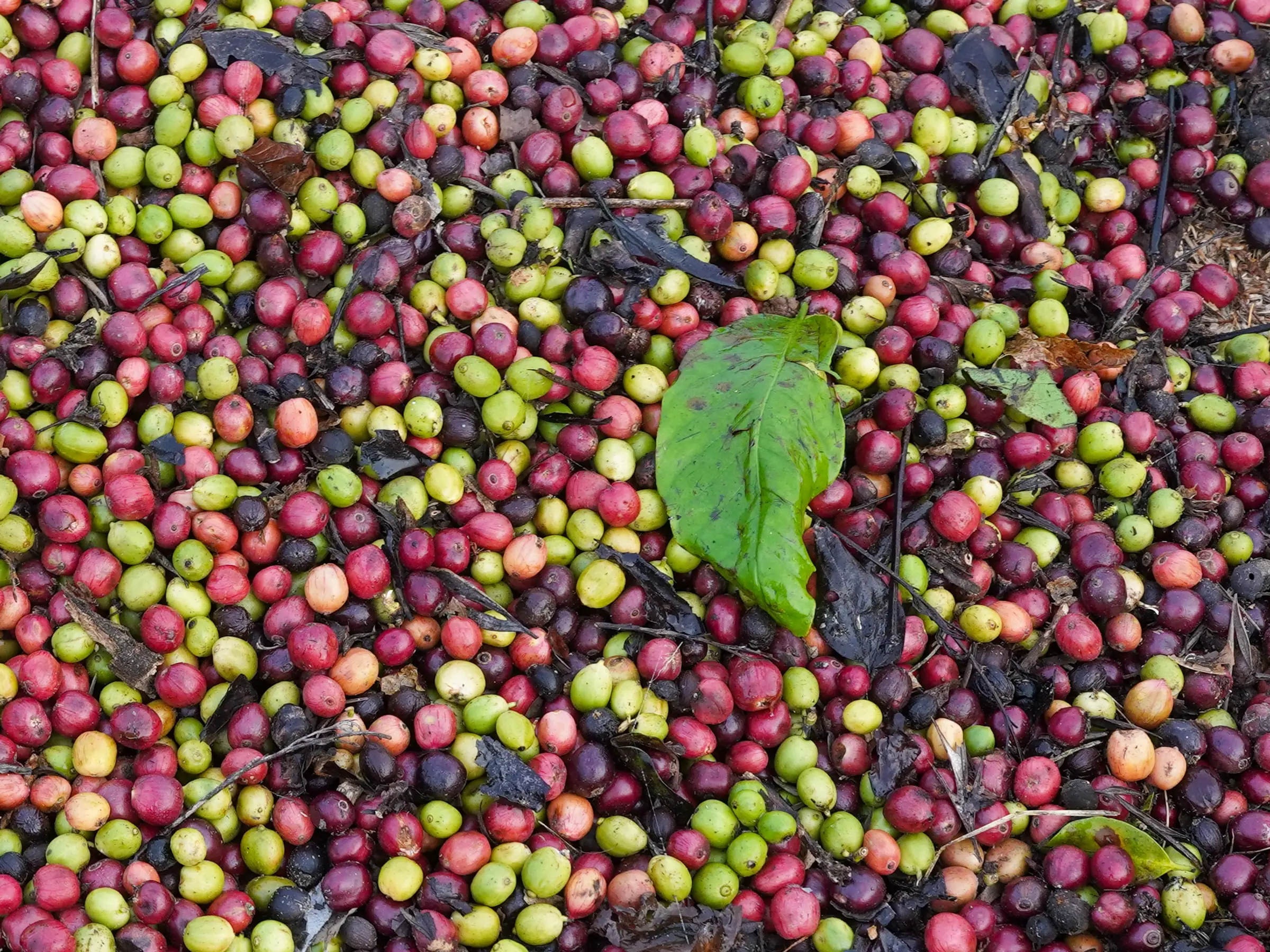
Cherries drying in the sun. Photo: T. A. Gonsalves, CC BY-SA 4.0.
How do you get the most out of a plantation walk?
Go early, wear proper shoes and ask questions. Mornings are cooler, the light under the canopy is softer and the birds are busier. Paths can be steep and, in the monsoon, slippery. Good questions to ask: which variety grows here, when it was last picked, how the beans are processed, and which trees give the shade.
If you’d like the whole story first, our page on coffee in Coorg, from blossom to cup covers the plant, the year and the cup, with sources. If you’d like to see it in person, the walk at Mokha Grove runs in the mornings, all year, for staying guests.