Coorg coffee, from blossom to cup
Coffee in Coorg
Mokha Grove sits inside a coffee estate near Pollibetta. In Coorg, coffee grows under shade trees and keeps to the rain's timetable.

Under the canopy
Grown in the shade.
India grows all of its coffee under shade, in a two-tier canopy of nearly 50 kinds of tree.1
The trees hold the soil on the slopes, recycle nutrients and keep the bushes cooler.1 On 113 farms in Kodagu, researchers found that every extra 100 native shade trees per hectare went with about 5.6% more coffee berries.2
- Overhead
- Shade trees, in two tiers. On the estate trails that includes strangler figs.
- On the trunks
- Pepper vines, trained up the shade trees as living poles.
- Underneath
- The coffee: a dense, glossy-leaved layer of bushes in the filtered light.
- In between
- Coorg's usual intercrops, says the Coffee Board, are pepper, cardamom, orange, banana and arecanut.1 Our estate also has orchards of avocado, litchi and sapota.

The coffee year
Blossom to cup.
The five stages below carry the Coffee Board's months and what a guest can see at each one.
-
01
Blossom
Robusta Feb–Mar · Arabica Mar–Apr
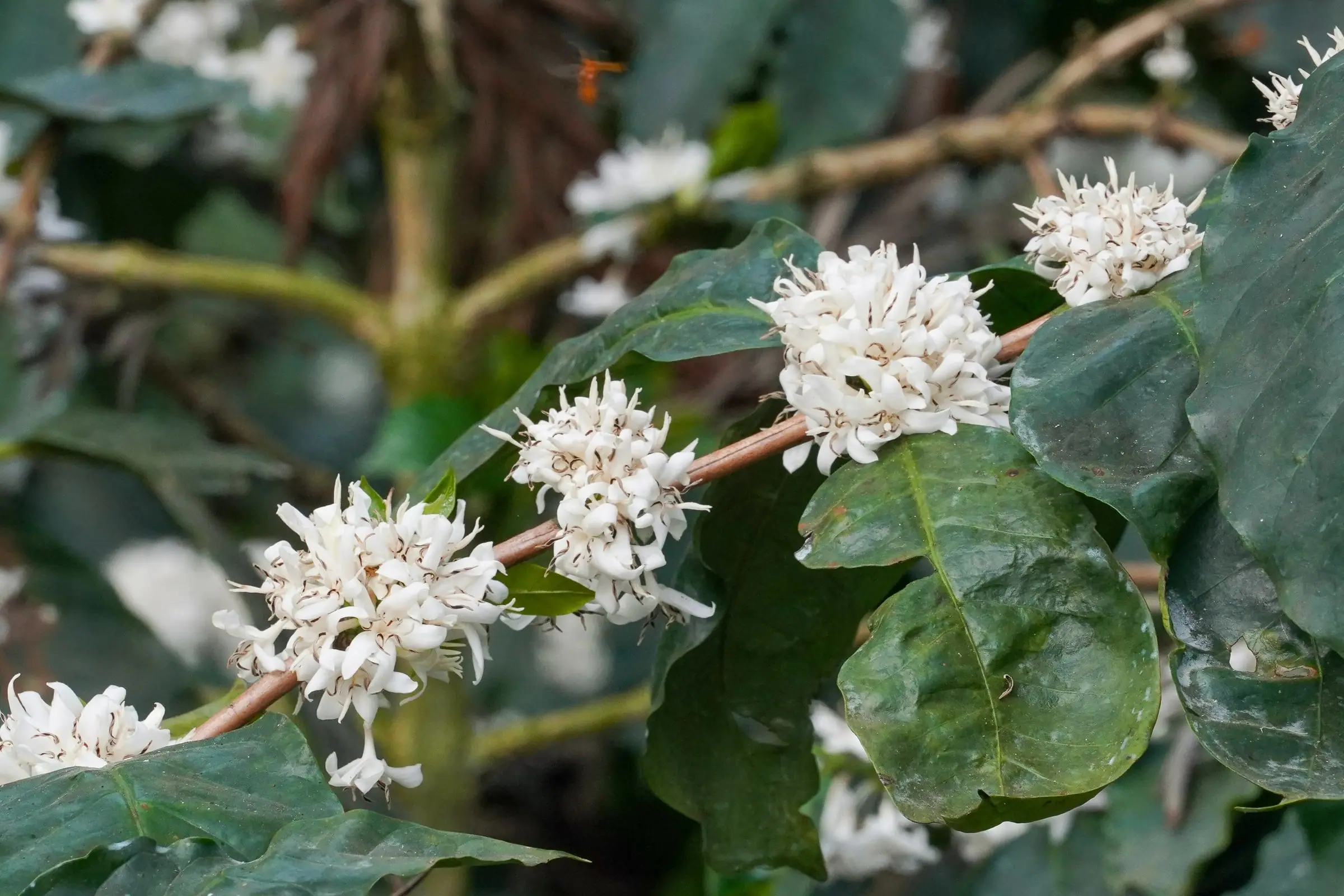
Coffee flowers after the first good pre-monsoon rain: the blossom shower, 25–40 mm of it, according to the Coffee Board. For Robusta that usually comes in February–March; for Arabica, March–April.1
A second rain, the backing shower, is needed to set the fruit: March–April for Robusta, April–May for Arabica.1 Growers in Kodagu say it has to follow within about two weeks.4 Some estates switch on sprinklers to trigger the flowering instead, which is one reason blossom dates differ from one estate to the next.5
What you'll see White flowers along the branches after the rain: in the family's words, coffee blossoms that perfume the air. How long it lasts depends on the year.
-
02
Cherry
After the backing showers, through the monsoon
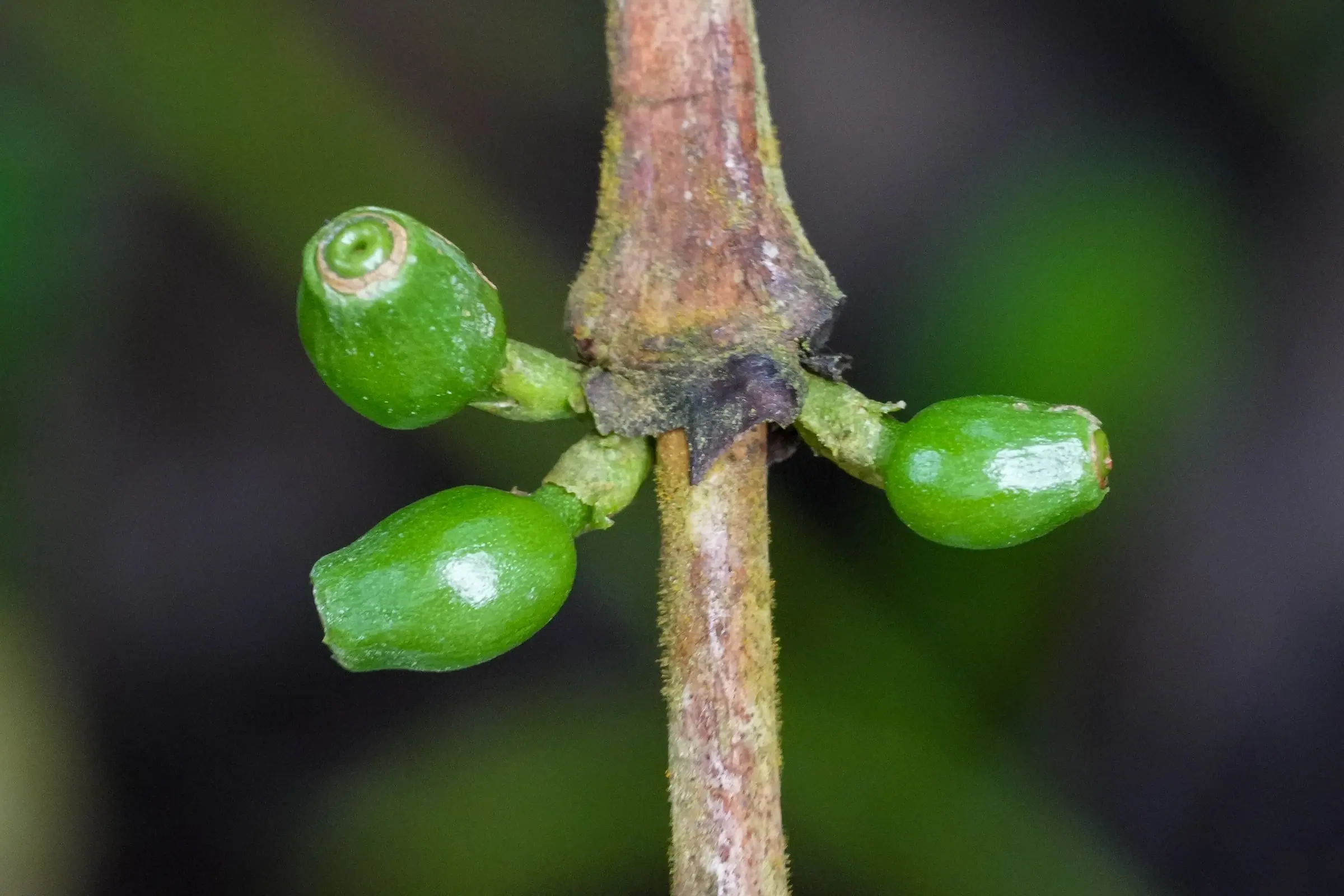
Once the flowers have set, small green berries form along the branches and grow on through the pre-monsoon heat and the long monsoon months, ripening towards red by picking season.
The south-west monsoon usually reaches Kodagu in the first week of June and eases by the second week of September.9
What you'll see Clusters of green berries on the branches through the rains; coloured cherries by the start of the cool season.
-
03
Harvest
Arabica Nov–Jan · Robusta Dec–Feb
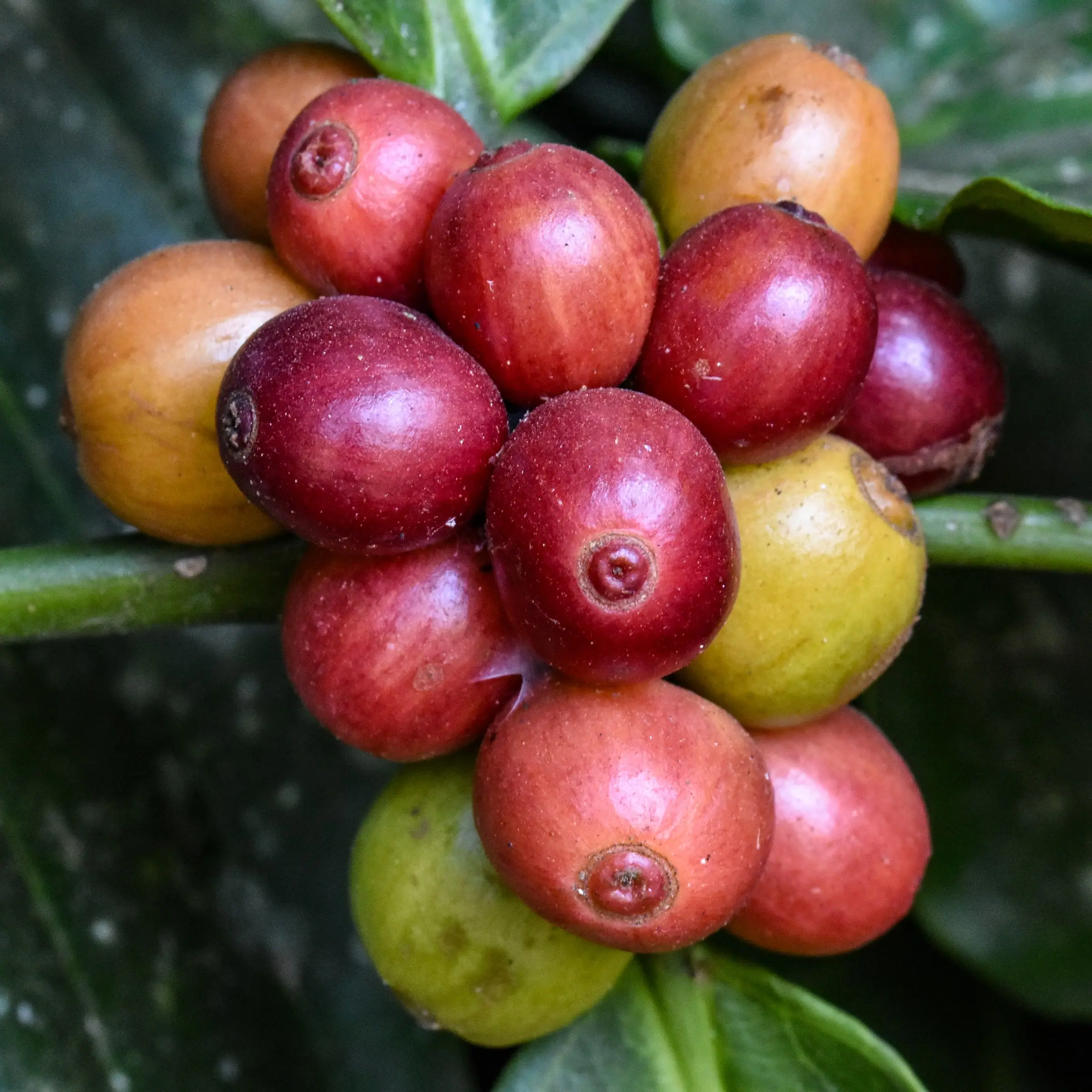
The Coffee Board's harvest windows are November to January for Arabica and December to February for Robusta.6 In South Coorg, where Robusta dominates, that means picking mostly from December into February.
Picking is only the start. Kodagu growers say the crop then needs at least two months to dry.4
What you'll see Picking, if your dates fall inside the window.
-
04
Roast
After drying and hulling
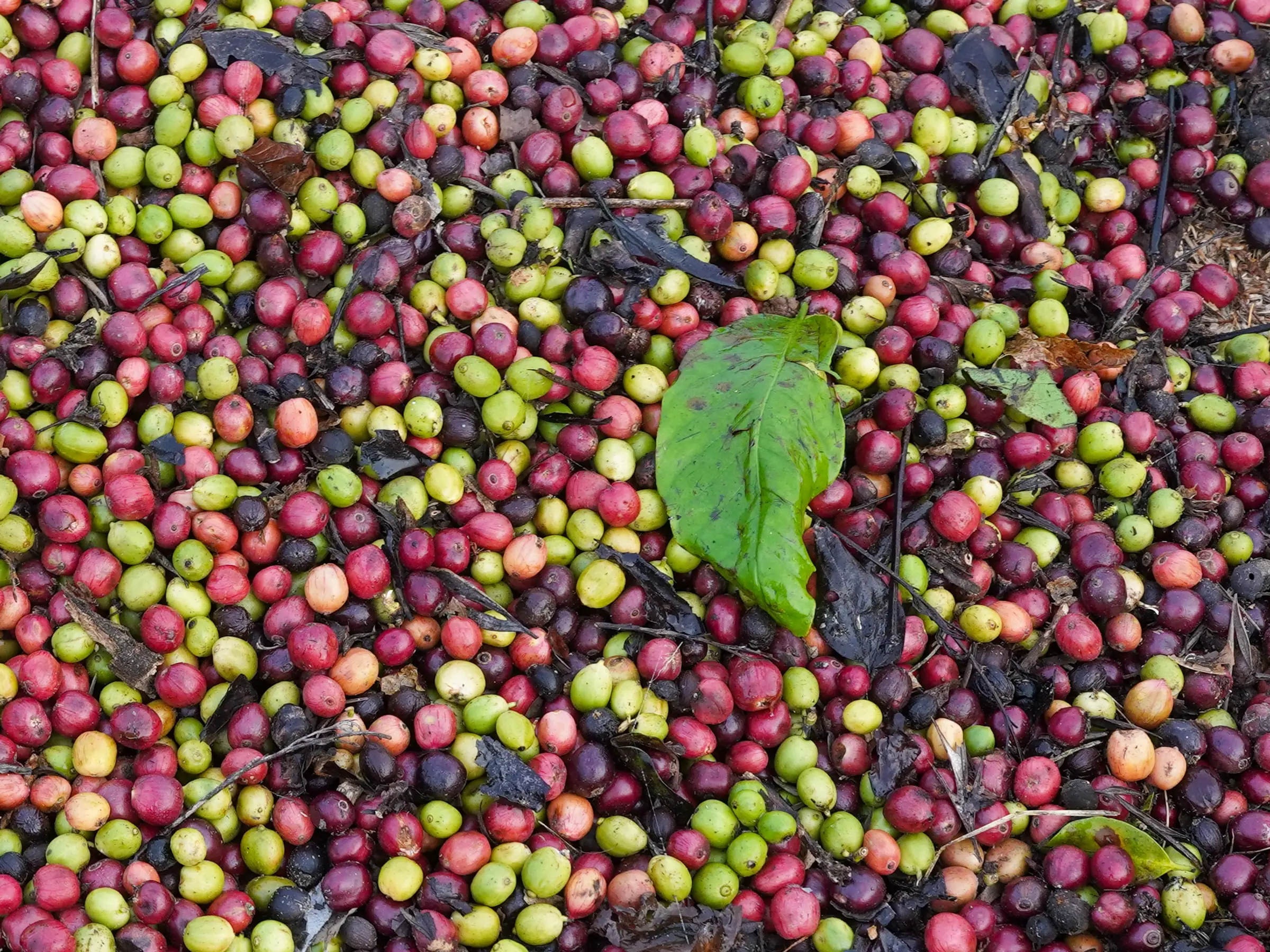
Between the picking and the roast, every coffee goes one of two ways. India's coffee trade names them by how the bean was dried.7
Washed · “parchment”
The cherry's skin and pulp come off first. The beans are fermented, washed and dried on open yards, still wrapped in a thin, papery skin called parchment.
Trade names: Robusta Parchment · Plantation (washed Arabica)
Natural · “cherry”
The whole cherry is dried in the sun, fruit and all. The dry husk is taken off afterwards.
Trade names: Robusta Cherry · Arabica Cherry
Either way, the dried coffee is hulled to leave green beans, which are graded. Roasting comes last.
-
05
Cup
Every morning of your stay
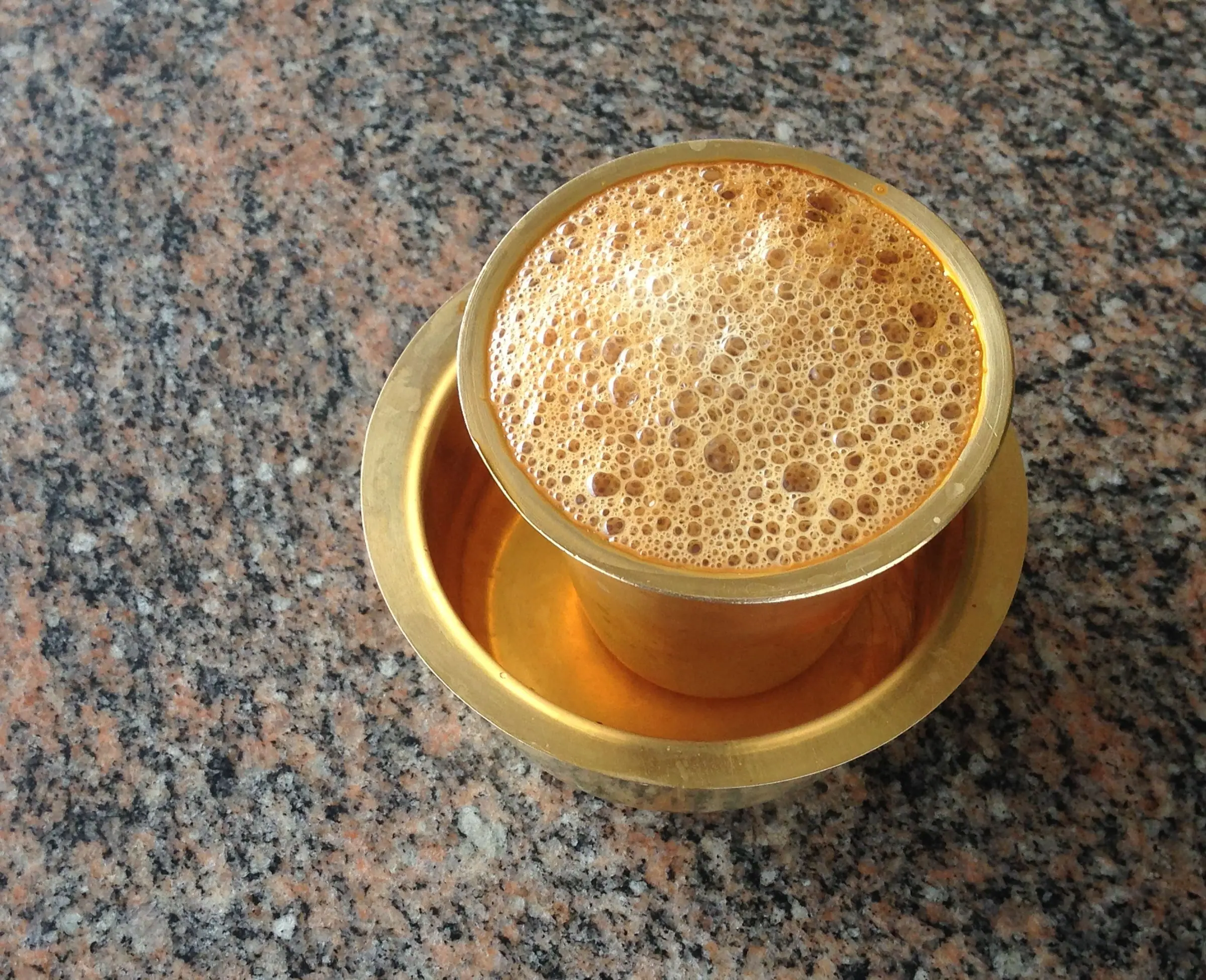
The one stage you can join any day of the year.
Coffee in your room


The coffee calendar
Month by month.
The published windows for Coorg, with the weather around them. The rain sets the real dates, and they change from year to year.
| January | February | March | April | May | June | July | August | September | October | November | December | |
|---|---|---|---|---|---|---|---|---|---|---|---|---|
| The coffee | ||||||||||||
| Robusta blossom showers1 most of South Coorg | no | yes | yes | no | no | no | no | no | no | no | no | no |
| Robusta backing showers1 most of South Coorg | no | no | yes | yes | no | no | no | no | no | no | no | no |
| Arabica blossom showers1 | no | no | yes | yes | no | no | no | no | no | no | no | no |
| Arabica backing showers1 | no | no | no | yes | yes | no | no | no | no | no | no | no |
| Arabica picking6 | yes | no | no | no | no | no | no | no | no | no | yes | yes |
| Robusta picking6 most of South Coorg | yes | yes | no | no | no | no | no | no | no | no | no | yes |
| Around the coffee | ||||||||||||
| Pepper picking in the hills8 | yes | yes | yes | no | no | no | no | no | no | no | no | no |
| South-west monsoon9 Usually 1st week of June to 2nd week of September | no | no | no | no | no | yes | yes | yes | first half | no | no | no |
| North-east monsoon showers9 Usually 1st week of October to 2nd week of November | no | no | no | no | no | no | no | no | no | yes | first half | no |
| Cool, dry season10 Karnataka Tourism's best time to visit | yes | yes | yes | no | no | no | no | no | no | yes | yes | yes |
Coffee windows (Coffee Board) Weather and seasons This month
-
January
Picking season. Robusta is coming in across South Coorg and the Arabica harvest is finishing. Pepper picking starts in the hills. Cool, dry days.
-
February
Robusta picking wraps up. If the blossom showers arrive, the first Robusta flowers open.
-
March
The likeliest month for blossom: the Robusta and Arabica windows overlap. Pepper picking ends.
-
April
Arabica blossom, then the backing showers that set the fruit. The last of the flowering.
-
May
The hottest month, before the rains. Small green berries where the flowers were.
-
June
The south-west monsoon usually arrives in the first week. The estate turns deep green.
-
July
Monsoon. Berries swelling under the rain; waterfalls across Coorg at full flow.
-
August
Still monsoon: the greenest, wettest stretch of the year.
-
September
The rains usually ease by the second week.
-
October
North-east showers come and go, and the cool, dry season begins. Cherries filling out on the branches.
-
November
Arabica picking begins across Coorg. Clearer, cooler days.
-
December
Arabica picking continues and Robusta picking starts: the beginning of South Coorg's main harvest.
Arabica or Robusta?
Mostly Robusta.
- ≈37% of India's coffee was grown in Kodagu in 2023-24: 132,620 tonnes out of 360,500.
- ≈85% of Kodagu's crop that year was Robusta: 113,400 tonnes of it.
- ≈95% of the coffee area in the Coffee Board's Virajpet zone (South Coorg, where we are) is Robusta.
Coffee Board of India, Database on Coffee, July 2024.11 Percentages are our arithmetic from its tables.
Robusta does well on lower, warmer, wetter ground; Arabica wants it higher and cooler. Coorg's coffee country sits at about 750–1,100 m, where the two overlap.1
On the Madikeri side of the district the split is close: 25,300 hectares of Arabica to 29,826 of Robusta. Around Virajpet and Pollibetta it's 2,538 hectares of Arabica to 50,057 of Robusta.11
About this estate
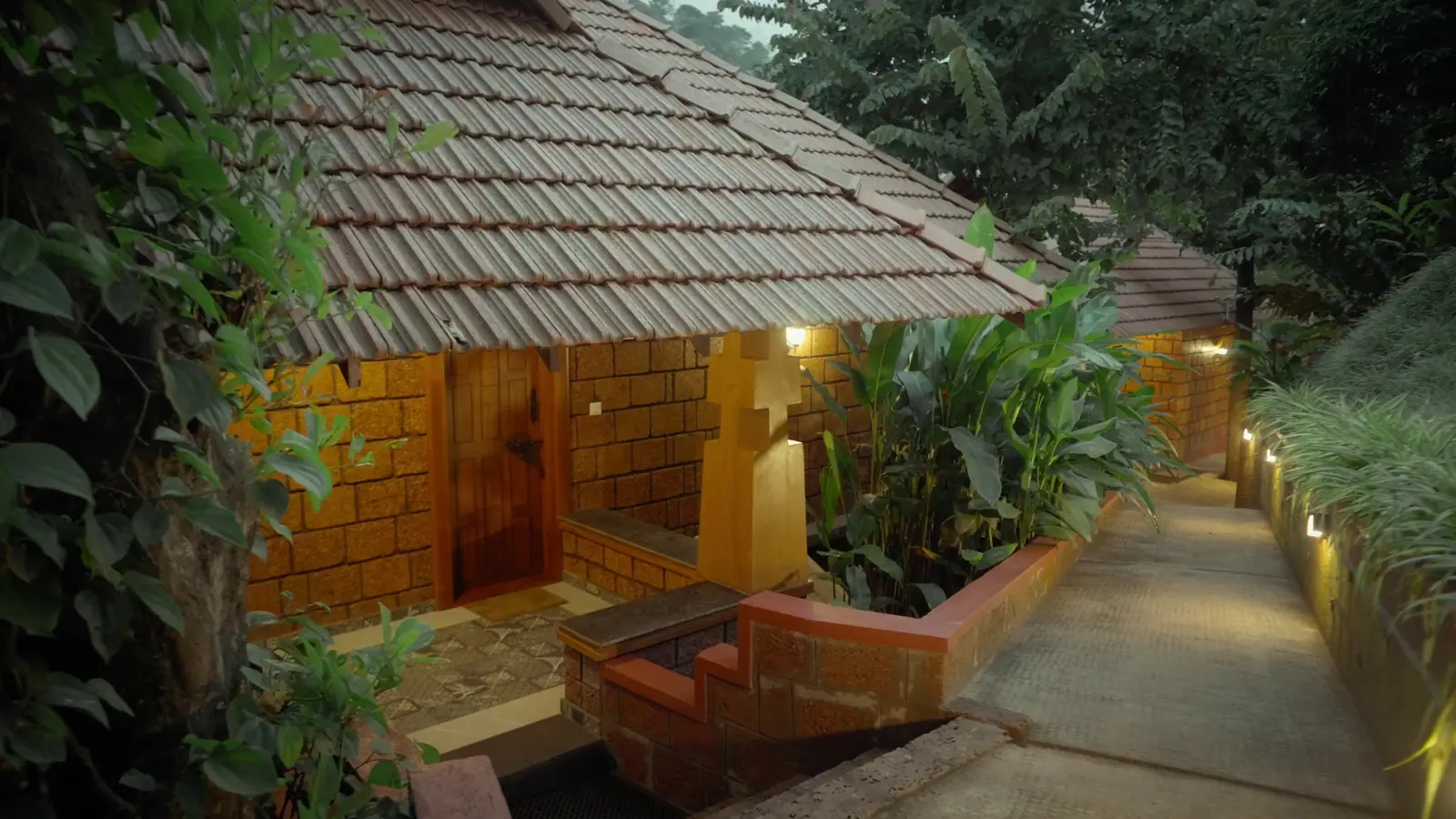
The homestay sits inside a South Coorg coffee estate. The hosts don't run the plantation, so this page sticks to what the Coffee Board publishes for the region.
| Arabica | Robusta | |
|---|---|---|
| Elevation | 1,000–1,500 m | 500–1,000 m |
| Temperature | 15–25 °C, cool and even | 20–30 °C, hot and humid |
| Humidity | 70–80% | 80–90% |
| Rain a year | 1,600–2,500 mm | 1,000–2,000 mm |
| Blossom showers | March–April | February–March |
| Backing showers | April–May | March–April |
| Harvest | November–January | December–February |
| Coorg varieties | S.795, Sln.6, Sln.9, Cauvery | S.274, CxR |
| Washed, in the trade | Plantation | Robusta Parchment |
| Natural, in the trade | Arabica Cherry | Robusta Cherry |
Coffee Board of India: growing conditions and Coorg's main varieties1, harvest months6, trade names.7 The Board calls S.795, released in the 1940s, by far the most popular Arabica selection.1
The GI tag, explained
A protected name.
A Geographical Indication protects a product's name and ties it to the place it comes from. In 2019, on the Coffee Board's application, “Coorg Arabica Coffee” became one.12
It was one of five Indian coffees recognised that year, alongside Chikmagalur Arabica, Araku Valley Arabica, Wayanaad Robusta and Bababudangiris Arabica.13
Two things follow. It covers Arabica only, so Robusta, most of what South Coorg grows, isn't part of it. And an estate can use the name only if it registers as an Authorized User.12
Mokha Grove makes no GI claim.
Geographical Indication · India
Coorg Arabica Coffee
- Application
- No. 604 · Class 30
- Applicant
- Coffee Board, Bengaluru
- Filed
- 1 January 2018
- Certificate
- No. 331, 1 March 2019
- Valid until
- 31 December 2027
- Covers
- Arabica only
- Used by
- Registered Authorized Users
Source: IP India GI Registry12
Pollibetta and coffee
Coffee country since 1857.
The first plantation in what planters called the Bamboo District was opened at Pollibetta, about 4 km from the estate by road, in 1857.14
- c. 1600
Baba Budan brings seven coffee beans from Yemen and plants them in the Chandragiri hills of Karnataka, by the Coffee Board's account of how coffee reached India.16
- 1854
The first coffee plantation in the Madikeri area of Coorg is opened.14
- 1857
The first plantation in the Bamboo District is opened at Pollibetta, in South Coorg.14
- 1890s
Coorg is producing 4,000–5,000 tonnes a year, and by 1894 more than 28,733 hectares are in bearing, much of it opened by planters from Ceylon, where leaf disease had ravaged the estates.14
- 1943
The Pollibetta Coffee Estates Company, managed from London by Matheson & Co., starts work at Pollibetta.15
- 1966
It becomes Consolidated Coffee Ltd.15
- 1992
Tata Tea acquires the company. In 2000 it is renamed Tata Coffee.15
- 2019
“Coorg Arabica Coffee” is registered as a Geographical Indication.12
- 2023-24
Kodagu grows about 37% of India's coffee.11
- Today
Tata Coffee's Pollibetta Estate grows Robusta and pepper, and keeps a nine-hole golf course among the coffee.16


In your room
The first cup, on the balcony.
Both suites have a kettle and estate coffee, so the first cup can happen before anyone's dressed, out on the balcony.
Breakfast is included, in the open dining pavilion, with a flask of coffee on the counter.
Coffee Stories
Understand it on foot.
The guided estate walk goes under the shade trees and explains how coffee grows in Coorg, from flower to cup. It's included in every stay.
“The estate tour with Brijesh was another highlight. He shared the history of his family's estate, explained how coffee is grown…”
Bees and blossom
Blossom week, bee week.
Robusta sets some fruit from the wind alone, but bees do far more. In Kodagu, bees were about 97% of visitors to Robusta flowers and raised fruit set by 50% over wind.17
The main pollinator, the giant rock bee, nests in big native trees.3 India's first beekeepers' co-operative was formed in 1936 in Virajpet, about 13 km from the estate.1819
FAQ
Coffee questions, answered
When is coffee harvested in Coorg?
The Coffee Board gives November to January for Arabica and December to February for Robusta. South Coorg grows mostly Robusta, so around Pollibetta picking mostly runs from December into February.
When does coffee blossom in Coorg?
After the first good pre-monsoon rain, the 'blossom shower': February to March for Robusta and March to April for Arabica, by the Coffee Board's figures. A second 'backing shower' is needed to set the fruit.
Is Coorg coffee Arabica or Robusta?
Both, but mostly Robusta. In 2023-24 about 85% of Kodagu's coffee by weight was Robusta, and in the Virajpet zone, which covers South Coorg, about 95% of the planted area is Robusta.
Can I see coffee being picked at Mokha Grove?
Picking in Coorg runs from about November to February. If your dates fall in that window, ask the hosts what the coffee around the estate is doing that week.
Is Coorg coffee GI-tagged?
Arabica is. 'Coorg Arabica Coffee' has been a registered Geographical Indication since 1 March 2019, and estates must register as Authorized Users to use the name. Robusta is not covered.
Figures checked in October 2026. The numbered notes link to the sources.
Let's keep the conversation brewing.
Questions, plans or bookings: we're a message away.
Message us on WhatsApp